Private, commercial and access roads built on the right base with proper drainage.
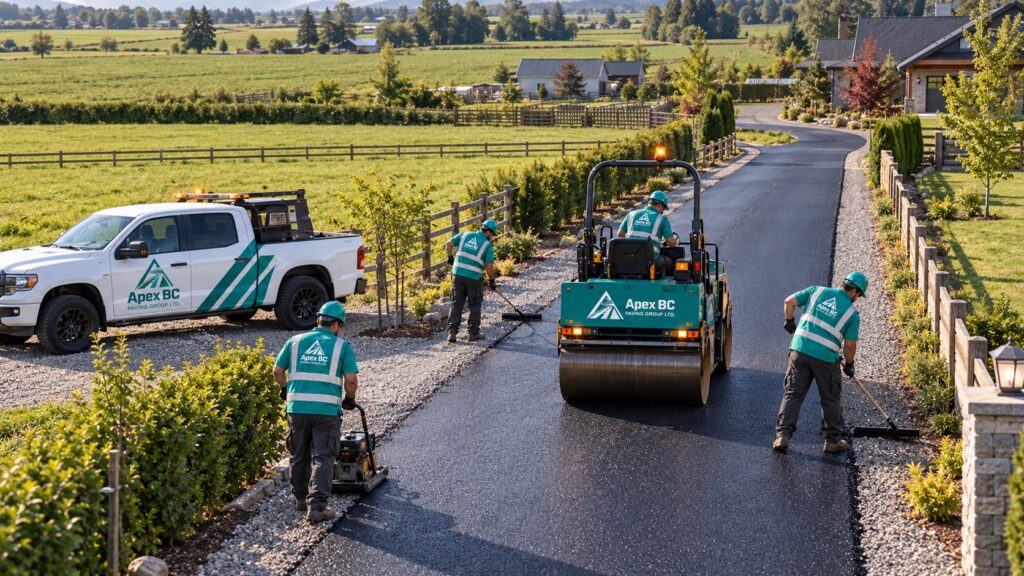
Apex BC Paving builds and repairs roads across British Columbia. That covers private lanes, commercial and industrial roadways, and access roads for farms, yards and rural properties. Crews build each road on a prepared base, with grading and drainage planned from the start.
This work is for acreage and farm owners, strata councils, developers and property managers. Water and heavy loads break a road. So we ask what will use it and how often, then size the structure to suit. Every project starts with an on-site quote.
Straight answers and paving built from the base up.
We visit, measure and check slope and drainage before we price the job.
Base depth, material and finish are spelled out, so you can compare properly.
Concrete, asphalt or rubber. We recommend what suits your site and budget.
Each road type has its own page with full details.
Gravel-to-asphalt conversions, repaving and pothole repair for acreage lanes, shared roads, farm roads and strata roadways. See private road and lane paving.
New and rebuilt roadways for developments, business parks and industrial sites, built for heavy trucks. See commercial and industrial road paving.
New and upgraded roads for farms, yards and rural properties. We pave them in full, in part or only where the load is heaviest. See access road paving and construction.
The usual surface for private and commercial roads. It goes down quickly, flexes with ground movement and is easy to patch, mill and overlay. It needs crack sealing and, on lighter-use lanes, occasional sealcoating.
Used in specific zones, such as truck aprons, loading docks, turnarounds, steep sections and the apron at a public street. It resists rutting and fluid drips where heavy vehicles stop and turn.
Chip seal is liquid asphalt with stone chips rolled in. It suits very long farm lanes, but it is rougher and relies on a sound base. On access roads, you can keep well-graded gravel where you do not need paving.
We walk the road with you and learn which vehicles use it. We can split the written quote into sections. That way, owners of a shared road can compare options or phase the work.
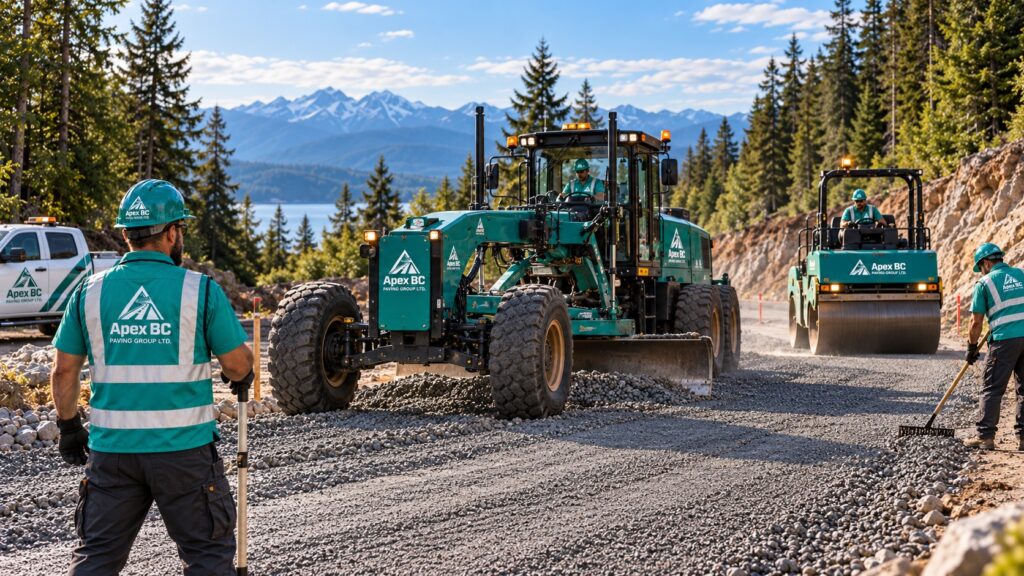
Crews remove topsoil and soft or wet material. Next, they add geotextile or geogrid where the ground needs it. Then they compact the crushed base in lifts, with thickness chosen for the loads.
A crown or cross-slope sheds water to ditches, swales or catch basins. Crews install or replace culverts where the road crosses low ground. They bring shoulders up flush to the pavement edge.
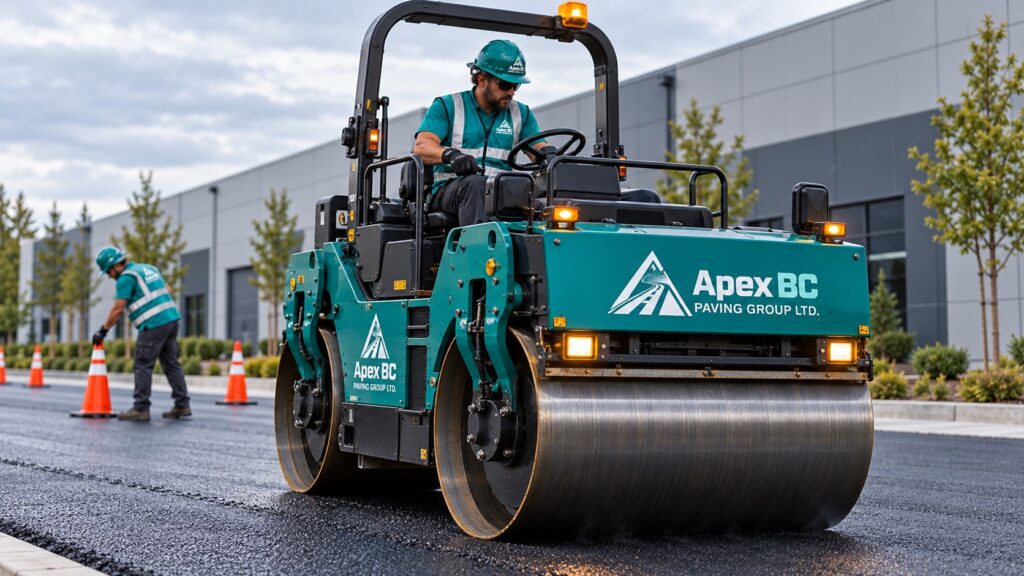
Crews lay asphalt in lifts and compact it while hot. They seal joints to limit water entry. Once paving finishes, we can mark centre lines, stop bars, crosswalks and fire lanes.
Road paving succeeds or fails on its base and drainage. Before we price each road paving project, we check the subgrade, the crown and the ditches or culverts. This matters because water under the surface does more damage than traffic on top. Before travelling to remote job sites we check current conditions on DriveBC.
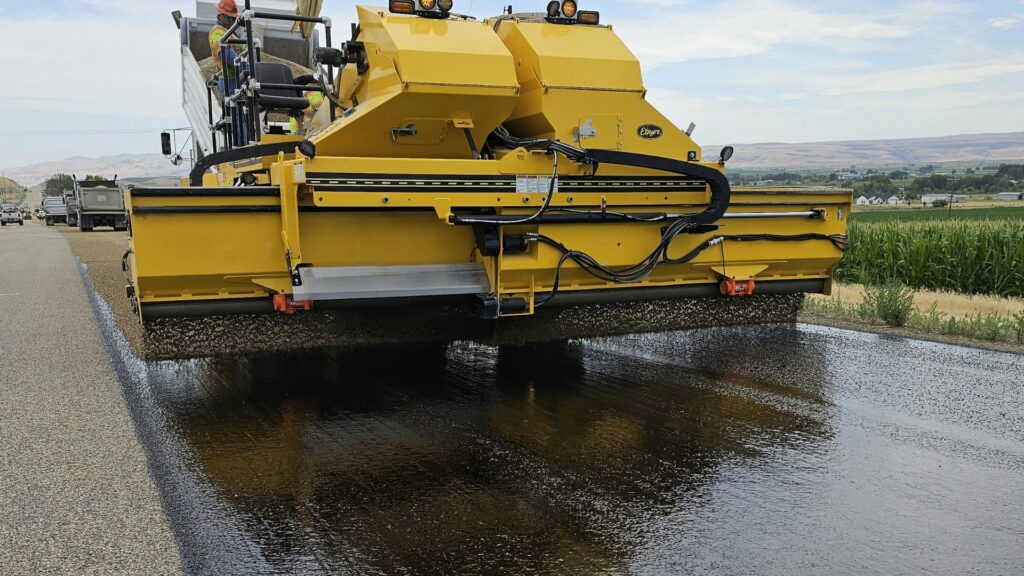
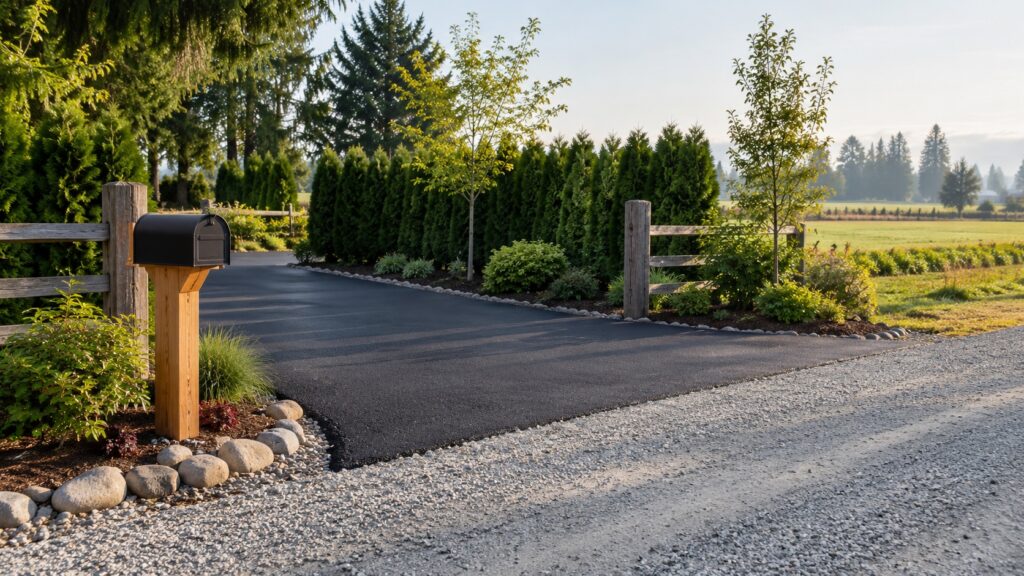
Examples of surfaces and finishes from across our services.
Something else on your mind? Call (778) 633-3373 and ask us directly.
Rarely as it is. We can usually reuse the gravel as part of the base, but it needs regrading, fresh crushed material and compaction. Soft spots underneath need fixing first.
No. Many owners pave only the entrance, turnarounds and steep sections, and keep the rest in well-built gravel. We can quote options so you can compare them.
It depends on whether the base is sound. Surface cracking and wear often respond well to mill and overlay. Rutting, widespread alligator cracking and pumping point to base failure, which needs deeper repair first.
Yes. We can quote the road in sections, starting with the worst areas. Up front, we plan drainage for the whole length so later phases tie in.
Ready to talk? Get a Quote or call (778) 633-3373.
Registered, covered and listed